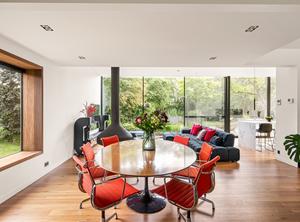
Brussels property market increasingly running at two speeds
Anyone buying or selling in the Brussels-Capital Region today faces a wide diversity in prices, quality and energy performance. While move-in-ready, energy-efficient homes in prime locations remain scarce and sought-after, properties in need of renovation are staying on the market longer. Find out what to look out for when buying or selling a property, what the profile of the Brussels buyer looks like, and what impact energy standards and registration duties have.
The buyer profile in Brussels is characterised by a dynamic mix of private individuals and investors. Private buyers make up the largest group, consisting mainly of single people, expats and Eurocrats. In 2025, for instance, more than half of all homes were bought by single people, many of them young first-time buyers.
At the same time, the Brussels-Capital Region has a strong rental market. Despite higher entry prices and rising interest rates, the capital remains an attractive place to let property. That said, we are seeing investors become more critical and selective today. The reference rents certainly play a role here. A landlord may deviate from them by no more than 20%, or must clearly demonstrate why a higher rent is justified. That puts extra pressure on investors. Yet demand for quality rental properties remains high.
Move-in ready scores, renovation waits
When it comes to sales, the Brussels property market is operating at two speeds. Energy-efficient homes in prime locations are in high demand and particularly scarce, which keeps demand and prices rising. Homes in need of renovation or properties with poor energy performance, on the other hand, take longer to find a buyer. “Prospective buyers today tend to make more rational decisions, whereas around the time of the COVID-19 pandemic they more often bought on emotional grounds,” says Jérôme De Nil, director of Found & Baker Brussels. “Alongside higher renovation costs and interest charges, energy performance is weighing increasingly heavily in the choice of property.”
By 2033, all homes in Brussels must achieve at least energy class E, and a C rating by 31 December 2045 at the earliest. The Brussels-Capital Region Government has yet to set the definitive, exact date for the private market by decree. As a result, demand for move-in-ready homes is high, just as in the rest of Belgium. Where renovation is required, buyers build in a risk margin, which may push the price down. However, this does not mean sellers should renovate their home themselves before putting it on the market. “Of course, everything depends on the condition of the property, but renovating an existing home is no guarantee of a higher asking price. As a seller, you don’t know in advance who will buy your property or whether your style and finishing touches will match the buyer’s.”
We expect the gap between move-in-ready homes and those in need of renovation will not close quickly in the coming years. Not least because many baby boomers want to swap their residential villas for a spacious apartment. “This brings a lot of older homes onto the market that do not meet current energy requirements or modern standards of comfort. These properties often involve high renovation costs. What’s more, this group is further increasing demand for renovated or near-new apartments in an already tight market.”
Preserving value
The diversity of the Brussels-Capital Region has for years been reflected in the very wide variation in pricing between its municipalities. ‘The further south, the more expensive’ is a trend that still holds true in 2026. “We do see the ripple effect spreading in certain neighbourhoods. Around Ixelles, for example, neighbouring municipalities such as Saint-Gilles and Forest are also benefiting from an upgrade,” notes Jérôme De Nil. “Triple-A locations, however, remain strongholds where properties hold their value or even continue to rise in price. Think of the Ixelles Ponds, Place du Châtelain or Parc Tenbosch. Municipalities such as Etterbeek, Uccle, Auderghem and Woluwe-Saint-Lambert are also popular with expats, among others, thanks to the presence of international schools.”
Buying and selling with the right information
Anyone buying a home in Brussels would do well to request the planning permits from the municipality in advance. “We often see a discrepancy between the approved plan and reality. The better informed you are, the greater your legal certainty. The costs associated with co-ownership also deserve proper attention. We advise prospective buyers to check what major maintenance works are planned. That way, you won’t be faced with any surprises. In addition, any costs of meeting the EPB requirements and the registration duties weigh on the total cost.”
Registration duties in the Brussels-Capital Region amount to 12.5%, which is significantly higher than in Flanders and Wallonia. “Prices in Brussels and the Flemish periphery around Brussels generally run parallel for the same type of property. The registration duties in Brussels, however, take a hefty bite out of the budget. For a home costing 800,000 euros, you pay 100,000 euros in registration duties in Brussels, and a maximum of 24,000 euros in the Flemish periphery if registration duties in Flanders return to 3%. That is a significant difference. That is why we urge sellers to set a correct price for their property from the outset. Marketing a home at too high a price and then cutting that price drastically is counterproductive. So inform yourself thoroughly and don’t hesitate to ask your estate agent critical questions.”